top of page


Vector Atomic (IonQ): Quantum Sensing, PNT Technology, Funding, Achievements & 2026–2030 Roadmap
Vector Atomic is a California‑based quantum sensing company founded in 2018 (spun out of Lawrence Livermore National Lab) that builds field‑validated atomic clocks, gravimeters, and inertial sensors for positioning, navigation, and timing (PNT) in GPS‑denied or contested environments. In September 2025, IonQ (NYSE: IONQ) announced an all‑stock acquisition of Vector Atomic, which closed in October 2025, integrating Vector’s sensing portfolio into IonQ’s computing and networkin
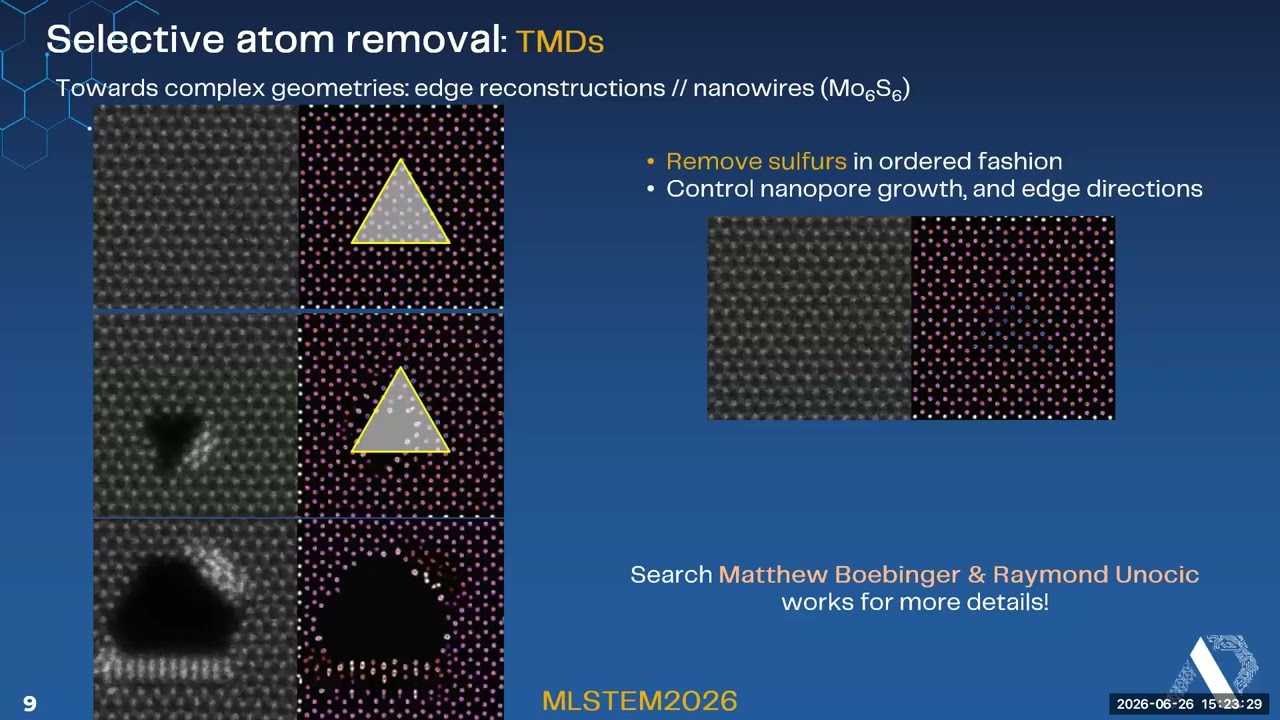
AtomQ: Atomic-Scale Quantum Manufacturing Startup from Oak Ridge Lab | 2026 Investor Brief & Tech Deep Dive
AtomQ is a deep-tech startup based in Knoxville, Tennessee, positioning itself as the world's first "Quantum Foundry." Unlike neutral-atom quantum computing companies that trap atoms in vacuum chambers with lasers, AtomQ engineers matter atom-by-atom directly inside solid-state crystals using ultra-precise electron beams. This approach creates stable, air-stable atomic configurations that can be manufactured at scale thousands of identical quantum structures in minutes enabli

PlanQC: Europe's Neutral‑Atom Quantum Leader - Funding, 1,000‑Qubit MAQCS Roadmap, and Investor Outlook
PlanQC is a German full‑stack quantum computing company building industry‑relevant machines using neutral atoms trapped in light as qubits. Instead of superconducting circuits that need extreme cryogenics, PlanQC's approach uses optical lattices/tweezers to hold identical atoms (e.g., strontium) in vacuum, enabling hundreds of physical qubits with flexible connectivity and a credible path to scale. The company covers the full stack: hardware, quantum OS/control software, algo

Infleqtion (INFQ) 2026: Neutral‑Atom Quantum Leader Funding, Roadmap to 30+ Logical Qubits, and Investor Brief
What Infleqtion Is Infleqtion is a publicly listed quantum hardware and software company (NYSE: INFQ) that builds neutral‑atom quantum computers, quantum sensors (including optical atomic clocks), and full‑stack software to run real workloads in energy, defense, finance, and materials science. Company Snapshot Item Details Legal name / Ticker Infleqtion, Inc. (NYSE: INFQ) HQ Louisville, Colorado, USA (with major hubs in Chicago, Oxford UK, and Australia) Core tech Neutral‑ato
Atom Computing Explained: Neutral‑Atom Quantum Leader, $300M+ Funding, 24 Logical Qubits, and 2026 Roadmap to 50 Logical Qubits
Atom Computing is a U.S. quantum hardware company building large‑scale, gate‑based quantum computers using neutral‑atom qubits trapped by laser arrays (optical tweezers). Founded in 2018 and headquartered in Berkeley, California, with a major R&D hub in Boulder, Colorado, the company has become one of the leading players in the neutral‑atom modality.

Pasqal Quantum Computing: Neutral-Atom Leader Goes Public with €340M Raise, Logical Qubit Breakthrough & 2026 Roadmap
Pasqal is a France-headquartered quantum computing company that builds neutral-atom quantum processors and full-stack software for industry, science, and government users. In 2026, the company is making a decisive move from research to industrial deployment: it has raised at least €340 million in new capital, entered a definitive business combination to go public on Nasdaq (with a pre-money valuation of $2 billion), and demonstrated that its logical qubits can outperform phys
QuEra Computing Explained: Neutral‑Atom Quantum Roadmap, $250M+ Funding, 2028 Fault‑Tolerant Libra on AWS
QuEra’s core idea: use individual neutral rubidium atoms as qubits, trapped by focused laser beams (“optical tweezers”) and arranged into reconfigurable 2D arrays. Because every rubidium atom is physically identical, QuEra avoids fabrication variability that affects solid‑state qubits.

Quantum Motion: Silicon-Based Quantum Computing Company – Funding, Technology, Roadmap & Investor Brief
Quantum Motion is a London-based quantum computing hardware company founded in 2017 by Prof. John Morton (UCL) and Prof. Simon Benjamin (Oxford), now led by CEO James Palles‑Dimmock. Its core thesis: build fault‑tolerant, utility‑scale quantum computers using standard 300 mm silicon CMOS foundries the same infrastructure that makes smartphone and data‑center chips so quantum processors can scale to millions of qubits while fitting inside ordinary server racks.
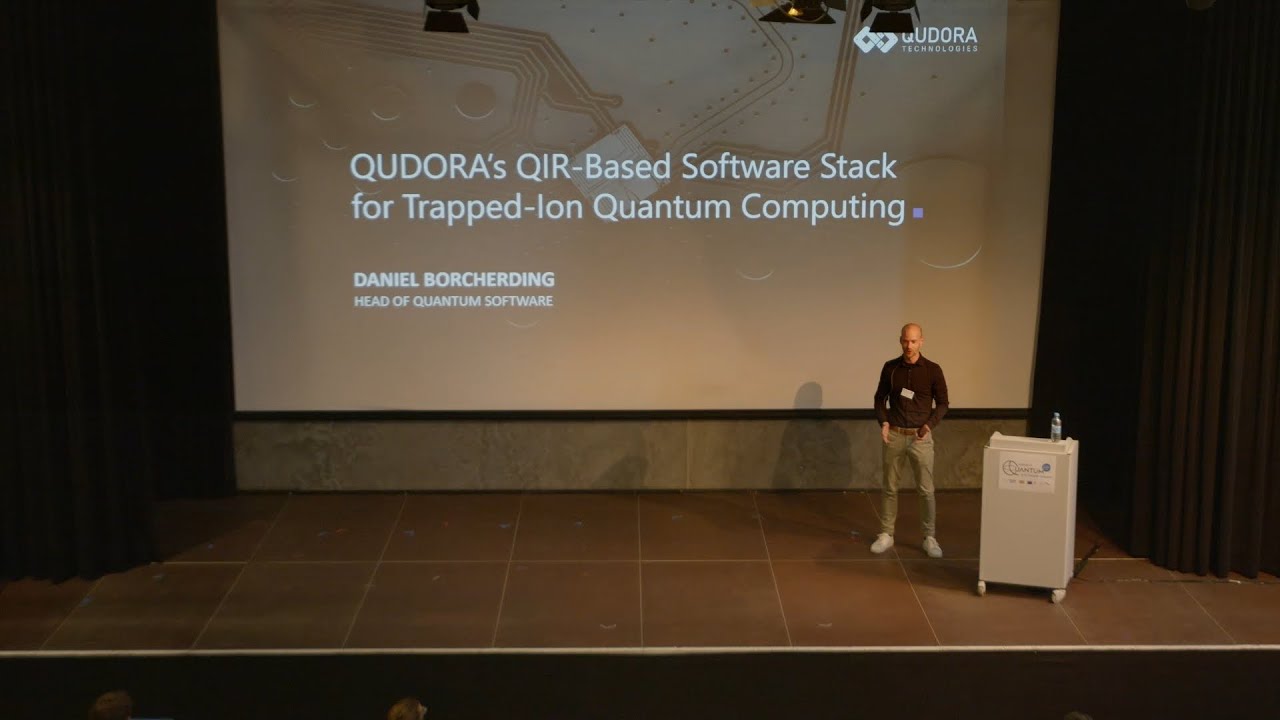
QUDORA Technologies: In‑Depth Tech Explainer & Investor Brief
QUDORA builds trapped‑ion quantum processors where individual ions are confined in electromagnetic traps and manipulated as qubits.

eleQtron: Microwave‑Driven Trapped‑Ion Quantum Computers - Technology, Funding, Roadmap & Investor Brief (2026)
eleQtron is a German deep‑tech startup founded in 2020 as a spin‑out from the University of Siegen’s Department of Quantum Optics, focused on building scalable trapped‑ion quantum computers for industrial and scientific use. Unlike many trapped‑ion rivals that rely on complex laser systems, eleQtron’s core innovation is its MAGIC platform - Magnetic Gradient Induced Coupling which controls qubits using microwave/radio‑frequency fields instead of lasers, enabling simpler, more

Universal Quantum: Microwave Trapped‑Ion Chips, Modular Scaling, Funding, and 2026–2030 Roadmap for Investors
Universal Quantum is a Brighton, UK–based quantum hardware startup founded in 2018 as a spin‑out from the University of Sussex’s Ion Quantum Technology Group, co‑founded by Professor Winfried Hensinger and Dr Sebastian Weidt. The company focuses on a modular trapped‑ion architecture that uses microwave control and ion transport between chips to scale toward utility‑scale, error‑corrected quantum computers.
AQT (Alpine Quantum Technologies): Europe's Record-Breaking Trapped-Ion Quantum Computer Leader - 2026 Investor Brief & Tech Explainer
AQT (Alpine Quantum Technologies) has achieved a record Quantum Volume of 32,768 with its LYNX series trapped-ion quantum computer, secured €12.28M EuroHPC contracts, and expanded cloud access via Amazon Braket and Scaleway. This deep-dive covers AQT's technology, funding, milestones, research status, and 2026–2030 roadmap for investors and enterprise buyers.

Quantinuum (QNT): Quantum Computing Leader - Helios, Sol & Apollo Roadmap, $1.68B IPO, 800× Logical Qubit Breakthrough, and 2029 Fault-Tolerance Plan
Quantinuum (Nasdaq: QNT), the world’s largest integrated quantum computing company, has emerged as a clear leader in the race to fault-tolerant quantum computing. Following a landmark $1.68 billion IPO in June 2026 and a series of peer-reviewed breakthroughs including an 800× improvement in logical qubit fidelity over physical qubits. Quantinuum is executing a clear roadmap to deliver utility-scale systems today and fault-tolerant machines by 2029.
IonQ: In-Depth Tech Explainer & Investor Brief
IonQ (NYSE: IONQ), the first pure-play quantum computing company to go public, has emerged as a leader in trapped-ion quantum hardware with a clear roadmap to 2 million physical qubits and 80,000 logical qubits by 2030. Backed by approximately $3.5 billion in cash following a $2 billion equity offering in October 2025 and a $1.8 billion SkyWater Technology acquisition in early 2026, IonQ is executing a vertically integrated strategy that spans chip design, fabrication, packag

Quantum Machines Explained: $280M-Funded Quantum Control Leader Powering 50%+ of Global Quantum Computers
Quantum Machines (QM) is a Tel Aviv–based company founded in 2018 that builds the “control layer” for quantum computers the hardware and software that tells fragile qubits what to do, when, and how to talk to classical computers in real time.

Nord Quantique Explained: $1.4B Quantum Unicorn, Bosonic Qubits, Error-Correction Breakthroughs & 2030 Roadmap
Nord Quantique, a Sherbrooke-based quantum computing startup, has quietly secured a US$30 million growth equity investment from Fidelity Investments Canada, valuing the company at approximately US$1.4 billion. The deal makes Nord Quantique the fourth Canadian-founded quantum hardware company to reach unicorn status, joining D-Wave, Xanadu, and Photonic Inc. in the elite ten-figure club.

Quantum Circuits Inc: Dual-Rail Qubit Tech, $550M D-Wave Acquisition, 2026 Roadmap & Investor Brief
D-Wave Quantum Inc. (NYSE: QBTS) has acquired Quantum Circuits Inc. (QCI), a Yale University spin-out, in a $550 million deal that marks one of the most significant moves in quantum computing M&A to date. The transaction, comprising $300 million in D-Wave common stock and $250 million in cash, closed in late January 2026 and positions D-Wave as the only major quantum company with both annealing and gate-model platforms under one roof.

OQC (Oxford Quantum Circuits): Europe's Quantum Leader – Tech Deep Dive, Funding, Roadmap & Investor Outlook
Oxford Quantum Circuits (OQC) has emerged as Europe's most commercially advanced quantum computing company, closing a landmark £260 million Series C in June 2026 the largest private quantum funding round in European history. With quantum systems already deployed in commercial data centers across the UK, US, Japan, and Spain, OQC is transitioning quantum from lab curiosity to enterprise infrastructure.
Atlantic Quantum Explained: Tech, Funding, Google Deal & What's Next
Atlantic Quantum is an MIT-founded quantum hardware startup that joined Google Quantum AI in October 2025 to accelerate the path to large-scale, error-corrected quantum computers. Below is a compact but deep explainer for technologists and investors: what the company does, how its tech works, funding and achievements, research status, and what to expect next inside Google Quantum AI.

SEEQC Explained: The Quantum on a Chip Company Going Public in 2026
SEEQC (pronounced “seek”) is an American quantum computing infrastructure company that’s trying to solve the biggest bottleneck in quantum: scaling. Instead of rooms full of analog control hardware and thousands of cables, SEEQC is building a digital quantum computing System‑on‑a‑Chip that puts control, readout, and classical processing right next to the qubits, at the same ultra‑cold temperatures


Bleximo: Revolutionizing Compute with Application-Specific Quantum Accelerators
Bleximo Corp. is a full-stack quantum computing systems integration startup focused on building specialized, application-specific quantum processors (ASQPs) rather than generic, general-purpose quantum supercomputers. Founded in early 2017 by quantum physicist Dr. Alexei Marchenkov and headquartered in Berkeley, California, Bleximo operates on the philosophy that vertical, purpose-built architecture will deliver practical commercial quantum utility years before fault-tolerant


Alice & Bob: How Cat Qubits Are Rewriting the Rules of Fault-Tolerant Quantum Computing
In the global race toward universal quantum computing, one of the most formidable bottlenecks has been hardware overhead. Traditional superconducting quantum processors, such as those relying on standard transmons, require up to 1,000 physical qubits to build a single error-corrected logical qubit.

Rigetti Computing
Rigetti Computing is a leader in the race for "quantum advantage," standing out as one of the few truly "full-stack" companies in the industry. Based in Berkeley, California, they don’t just design software; they build the entire ecosystem from the ground up. This includes designing and manufacturing quantum chips, building the hardware cabinets, and developing the cloud-based software that allows users to access quantum power.

Google Quantum AI | The Future of Computing: A Deep Dive into Google Quantum AI
The race to build the world’s first useful quantum computer is one of the most ambitious scientific endeavors of our time. At the forefront of this revolution is Google Quantum AI, a specialized division of Alphabet Inc. dedicated to moving beyond the limits of classical physics.

IBM's Quantum Computing
IBM’s quantum computing division is a global leader in the development of Superconducting Qubits, a hardware architecture that uses cryogenic electronic circuits to process information. As of mid-2026, IBM has transitioned from demonstrating "quantum utility" to enabling the first era of "quantum advantage" for real-world applications
bottom of page