.png)
Scientific Committee Members
Dr. Pat Gumann
IBM team lead for quantum system integration and cryogenics, USA

Dr. Patryk Gumann, also known professionally as Pat Gumann, is an experimental physicist and quantum-technology researcher associated with IBM Quantum. He leads work in quantum-system integration and cryogenics, with a particular focus on the hardware infrastructure required for superconducting quantum computers.
Gumann earned his PhD in experimental condensed-matter physics from the Technical University of Darmstadt, Germany, in 2007. His research and academic career have included work at Forschungszentrum Jülich, Leiden University, the University of Tokyo, Kyoto University, Rutgers University, the Institute for Quantum Computing at the University of Waterloo, and Harvard University.
His research background spans:
-
Low-temperature physics and quantum fluids.
-
Quantum sensing, including nitrogen-vacancy defects in diamond.
-
Phosphorus defects in silicon.
-
Experimental superconducting quantum computing.
-
Cryogenic systems for large-scale quantum processors.
He joined IBM’s quantum-computing efforts in 2016 and became involved in developing the integration and cryogenic systems that support superconducting qubits. In 2022, Gumann and his team reportedly commissioned a large quantum-ready dilution refrigerator capable of reaching approximately 25 millikelvin within a 1.7-cubic-metre volume. The system was described as a major step toward commercial-scale cryogenic infrastructure for quantum computing.
He has also contributed to numerous research publications and is credited with more than 180 patent disclosures across his academic and industrial career.
Dr Rami Ahmad El-Nabulsi
Department of Optical Networks CESNET, Prague, Czech Republic.

Dr. Rami Ahmad El-Nabulsi, Ph.D., is a distinguished theoretical physicist and applied mathematician affiliated with the Center of Excellence in Quantum Technology and the Quantum-Atom Optics Laboratory at Chiang Mai University, Thailand, the University of South Bohemia in the Czech Republic, and CESNET in Prague. He earned his Ph.D. in particle and mathematical physics and modeling, following advanced studies in plasma physics and a strong foundation in physics and applied mathematics.
With extensive academic and research experience, he has contributed to pioneering projects in nonlinear quantum dynamical systems, solid-state physics, superconductivity, plasma MHD, biophysics, geophysics, nuclear engineering, and space sciences, establishing novel models and mathematical frameworks that advance the understanding of complex physical systems. A prolific author with more than 400 peer-reviewed publications in leading international journals, Dr. El-Nabulsi’s work bridges theoretical innovation with real-world applications. He has received numerous honors, including recognition among the Top 2% of scientists worldwide, lifetime achievement award, innovation in science award, outstanding researcher award, pioneer research award, neurocomputing, excellence in innovator award, excellence in research award, nanophotonic research award, and is a highly sought-after invited speaker at global scientific forums. He serves as a reviewer for more than 250 international journals and as an editorial board member for over 40 journals, contributing significantly to the development of advanced physics and applied sciences. He is also committed to teaching and mentoring the next generation of scientific leaders.
Dr Varsha Sambhaje
Quantum Research Centre (QRC), SRM-AP University - Amaravati, India

Dr. Varsha Santosh Sambhaje is an Assistant Professor at SRM University–AP and a faculty member of its Quantum Research Centre. She holds a Ph.D. in Quantum Computing from D. Y. Patil International University, Pune, and works in quantum computing, quantum information science, quantum cybersecurity, photonic quantum systems, and computational linguistics. Her research interests include quantum algorithms, quantum entanglement, quantum cryptography, and the integration of quantum computing with artificial intelligence and language technologies. At SRM University–AP, she contributes to the development of the Quantum Reference Facility established under the Amaravati Quantum Valley Project, India’s first indigenous, open-access quantum-computing testbed.
Dr Arindam Ghosh
Department of Physics, Indian Institute of Science, Bangalore, India

Dr. Arindam Ghosh is a distinguished experimental condensed-matter physicist and JRD Tata Chair Professor of Physics at the Indian Institute of Science (IISc), Bengaluru. His pioneering research focuses on two-dimensional materials, graphene, nanoscale electronics and quantum technologies.
He is known for discovering novel quantum-critical behaviour in ultraclean graphene, including the unique interaction between charge and heat flow in its electron fluid. His work also explores ultra-sensitive quantum sensors, thermoelectric devices and atomically thin materials for next-generation technologies.
A recipient of the Infosys Prize and Shanti Swarup Bhatnagar Prize, Dr. Ghosh contributes to India’s National Quantum Mission and leads deep-tech innovation in quantum materials and devices.
Dr Luigi Maxmilian Caligiuri
Foundation of Physics Research Center (Director) - FoPRC, Cosenza, Italy

Prof. Luigi Maxmilian Caligiuri is an internationally recognized physicist, academician, and researcher with expertise spanning quantum mechanics, condensed matter physics, materials science, astrophysics, and applied mathematics. The author of more than 113 scientific publications, he has served as a professor, mentor, peer reviewer, editorial board member, and scientific committee participant at numerous international conferences and journals.
A member of several prestigious scientific organizations, including the European Quantum Flagship and the CEN-CENELEC Focus Group on Quantum Technologies, Prof. Caligiuri has received multiple international honors for his contributions to science, research, and academic leadership. His work continues to promote innovation, interdisciplinary collaboration, and the advancement of fundamental and applied physics.
Dr Fatih Ozaydin
Professor of Quantum Technologies at Tokyo International University, Tokyo, Japan
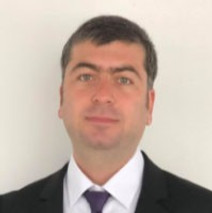
Professor Fatih Ozaydin is a Professor of Quantum Technologies and Data Management at Tokyo International University, Japan; Associate Editor of Quantum Information Processing; Senior Scientist and Board Member at the Nanoelectronics Research Center; and Managing Director of BeeBI Consulting Japan. He holds a Ph.D. in Quantum Information and Quantum Optics from Osaka University and has conducted research across quantum communication, quantum networks, quantum metrology, quantum thermodynamics, quantum AI, and nanoelectronics. He has published widely in quantum information science and contributes to international initiatives including CERN’s Future Circular Collider project.